
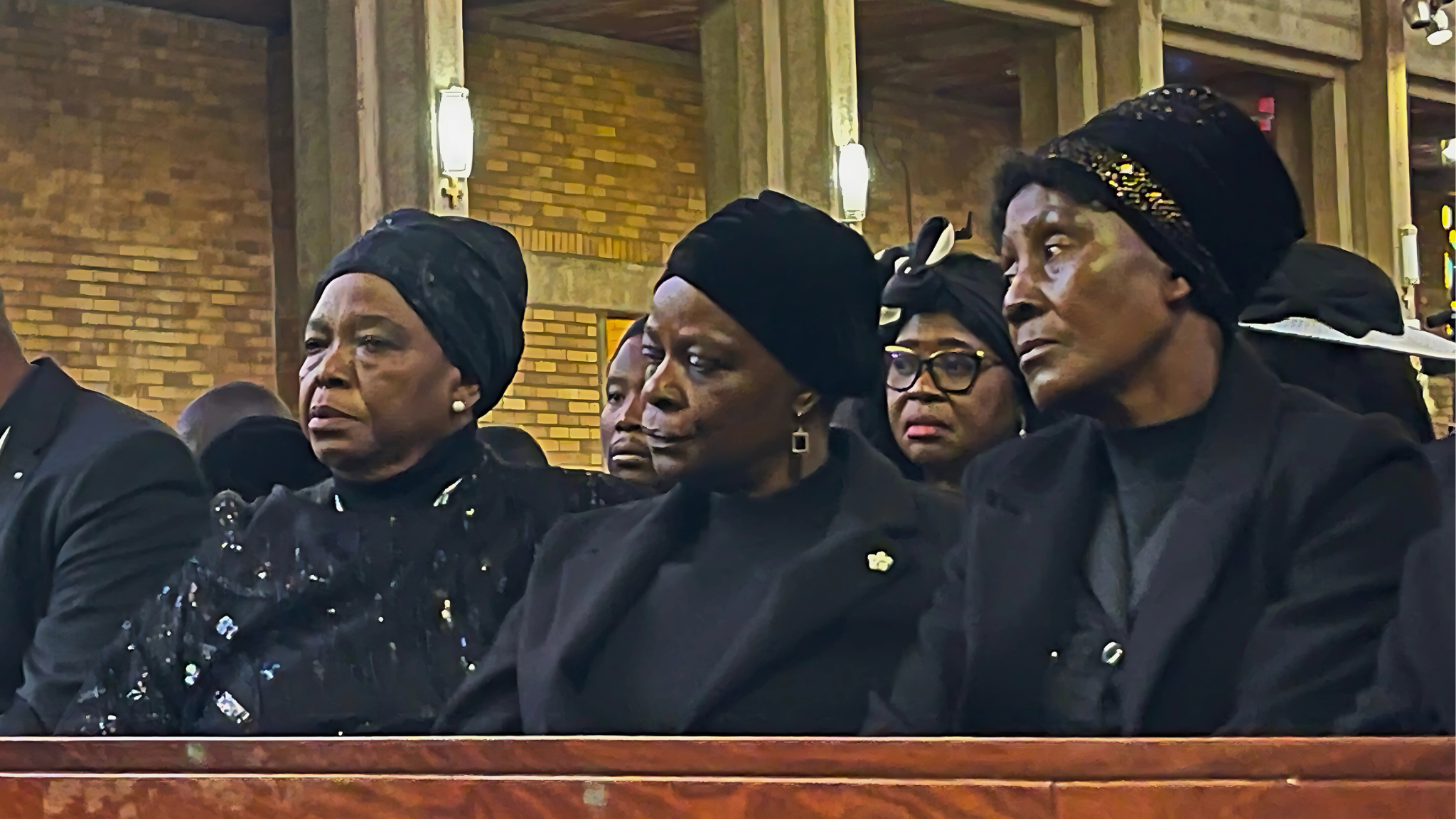
UBUNTU ON TRIAL: WHY SOUTH AFRICA MUST UPHOLD THE DIGNITY OF THE LUNGU FAMILY
By a South African Legal Observer
In the heart of South Africa’s post, apartheid legal tradition lies a principle deeper than statutes and stricter than procedure: Ubuntu. This philosophy, I am because we are, is not just rhetoric. It shapes our jurisprudence, guides our courts, and guards the soul of our democracy. And today, in the matter between the Zambian government and the bereaved family of the late President Edgar Chagwa Lungu, Ubuntu is under siege.
The Zambian state, in a series of cold, calculated affidavits submitted to the South African High Court, has denied any wrongdoing in its treatment of the late leader. It claims it merely followed the law. But law without humanity is tyranny in a powdered wig. The affidavits read like bureaucratic justifications for callousness, denials upon denials, striking out allegations as “vexatious” and “scandalous,” while ignoring the simple truth: a family was grieving, and a President was dying.
A MATTER OF DIGNITY, NOT POLITICS
What’s at stake here is not just the fate of a corpse, but the legacy of human dignity. The Lungu family brought the former President to South Africa for medical care, a decision countless Africans make every year, trusting in our healthcare and our compassion. When he died on our soil, they sought to bury him here, quietly and respectfully.
Instead, the Zambian state responded with interference, legal maneuvering, and accusations of a secret political agenda. They claimed Lungu had no right to attend peace summits or church services. They suspended his benefits. And now, in perhaps the cruelest twist, they claim he never wished to be buried in South Africa, despite the fact that he was brought here for healing and found his final rest here.
In South African law, the dignity of the dead and the rights of the bereaved are not trivial matters. Our courts have repeatedly affirmed the sanctity of burial wishes, the cultural rights of families, and the inviolability of the mourning process.
SOUTH AFRICAN LAW IS CLEAR
In Dudley v. Dudley NO (2009), the High Court affirmed that burial decisions must respect the wishes of the deceased and his or her immediate family, especially in cross, border matters.
In S v. Makwanyane (1995), our Constitutional Court emphasized that dignity is not earned, it is inherent. Even a condemned prisoner is owed dignity. How much more, then, a former Head of State?
Further, under the National Health Act (Section 90(1)(m)) and Regulations Relating to the Management of Human Remains, a deceased foreign national may be buried in South Africa with proper permits. No foreign state can override that unless the body was illegally brought in, or unless the deceased’s family requests repatriation.
To demand, as the Zambian government seems to do, that the Lungu family surrender his body is not just tone, deaf, it may be legally impermissible under South African law. We are not a colony of Lusaka. Our courts do not answer to foreign executive pressure. We answer to justice.
THE ZAMBIAN STATE’S CASE: LAW WITHOUT SOUL
The Applicant’s affidavit hinges on legal technicalities:
- That Lungu had no right to engage in politics;
- That benefits were merely “suspended,” not revoked;
- That the family acted “secretly” and excluded the state;
- That Lungu’s travel to South Africa was improperly motivated.
All of this might hold weight in Lusaka. But in Johannesburg, Pretoria, or Bloemfontein, it clashes with our values. It is legally neat, but morally bankrupt.
Even if the Zambian state technically followed its “Benefits Act,” that does not justify blocking a church service, interfering with medical travel, or trying to dictate burial terms on foreign soil.
IF THE COURT RULES FOR ZAMBIA: A DANGEROUS PRECEDENT
In the unlikely event that the South African court rules in favor of the Zambian government, the question becomes urgent: Can the South African government force the Lungu family to hand over the body?
The answer is no, unless:
- The burial permit is revoked (which would be legally dubious and challengeable);
- The body is declared unlawfully imported (which it is not; Lungu entered on a diplomatic passport);
- Or unless the family consents voluntarily (which they clearly do not intend to do).
The South African government cannot exhume or seize the body without court order and extraordinary legal grounds. Such action would ignite a diplomatic firestorm and public backlash.
A BURIAL IN ZIMBABWE?
If Zambia wins, and if South Africa is somehow pressured into denying burial, another outcome looms: Zimbabwe.
The Lungu family could invoke SADC diplomatic support, with the backing of ZANU PF, President Mnangagwa’s government has a long and complex relationship with the Lungu era. Zimbabwe may offer what Zambia denies: a dignified, political asylum in death.
That would not be a victory for Zambia. It would be an indictment. A Pan, African humiliation.
FINAL THOUGHT: WHO ARE WE?
This is not just about Lungu or Zambia. This is about us.
If South Africa cannot stand as a sanctuary for the dying, as a refuge for grieving families, as a land where Ubuntu lives even in death, then what was the point of 1994?
We do not bury bodies. We bury people. And people deserve dignity.
Let the court favour the Lungu family, not because they are powerful, but because they are human.
Deprecated: ltrim(): Passing null to parameter #1 ($string) of type string is deprecated in /home/incentivize/public_html/wp-includes/formatting.php on line 4496